How Ecommerce Businesses Can Grow with Smarter SEO Strategies

The ecommerce industry is evolving rapidly, and businesses need more than attractive product pages to stand out in a competitive digital marketplace. Thatware LLP understands that sustainable online growth begins with a strong search presence, relevant content, and a seamless shopping experience. By investing in Ecommerce SEO services, online retailers can improve their search visibility, attract customers who are actively looking for their products, and create more opportunities for conversions. A well-planned SEO strategy helps businesses connect with the right audience while building long-term credibility. From optimizing product descriptions to improving website performance, every element contributes to a stronger digital foundation and a more rewarding customer journey.
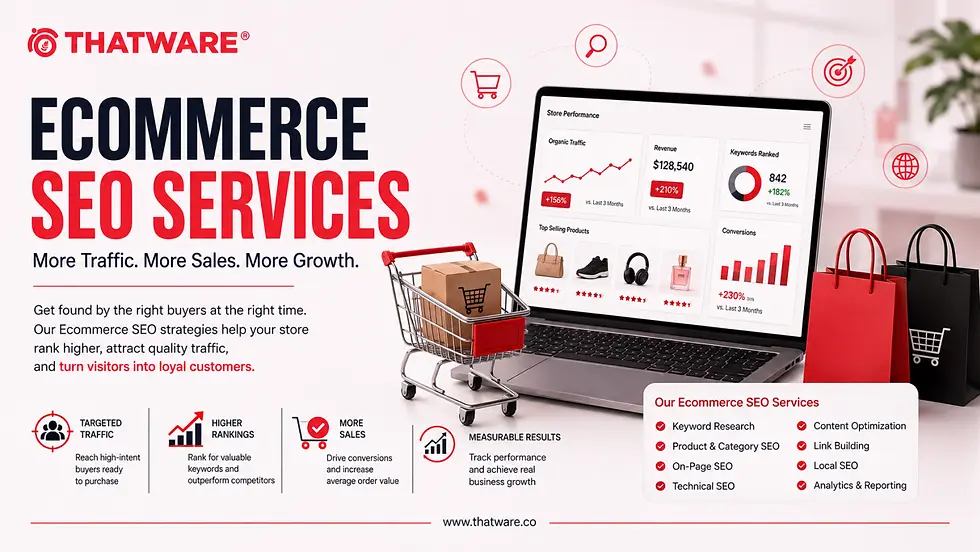
Understanding the Importance of Ecommerce SEO
Ecommerce SEO involves optimizing an online store so that search engines can understand its pages and present relevant products to potential customers. It includes technical improvements, keyword research, content optimization, internal linking, and user experience enhancements.
A properly optimized ecommerce website makes it easier for shoppers to discover products through organic search. Instead of depending entirely on paid advertising, businesses can develop a sustainable source of relevant traffic. Strong organic visibility also helps establish brand recognition and encourages customers to explore more products.
Creating Product Pages That Attract Buyers
Product pages play a central role in ecommerce performance. Each page should provide useful information that helps customers understand a product and make confident purchasing decisions.
Clear product titles, descriptive headings, original descriptions, and informative image alt text help search engines interpret page content. Relevant keywords should appear naturally without making descriptions repetitive or difficult to read.
High-quality images, transparent pricing, shipping details, customer reviews, and clear calls to action can further improve the shopping experience. When product pages answer common questions and communicate value effectively, visitors have more reasons to continue toward checkout.
Improving Website Structure and Navigation
A logical website structure benefits both search engines and customers. Categories, subcategories, and product pages should follow a clear hierarchy that makes important information easy to find.
Descriptive URLs, useful breadcrumbs, and relevant internal links help users navigate an online store without unnecessary confusion. Search engines can also use these structural signals to understand relationships between different pages.
Retailers should pay particular attention to large product catalogs. Duplicate URLs, unnecessary filter combinations, and outdated product pages can create crawling and indexing challenges. Regular technical audits help identify these issues and keep the website organized as the business expands.
Enterprise Ecommerce SEO for Large Online Stores
Large ecommerce businesses face additional challenges because they often manage thousands of products, multiple categories, changing inventory, and complex website architectures. Enterprise ecommerce SEO provides a strategic approach to managing these demands while supporting consistent organic growth across extensive digital platforms.
Enterprise-level optimization requires coordination between SEO specialists, developers, content teams, and ecommerce managers. Automated monitoring, scalable metadata templates, structured data implementation, and crawl management can help maintain quality across large inventories.
Businesses should also establish clear reporting systems to track organic traffic, rankings, conversions, indexed pages, and revenue contributions. These insights help decision-makers identify opportunities, prioritize technical improvements, and align SEO activities with broader commercial objectives.
Making Mobile Shopping Faster and Easier
Mobile devices are an essential part of modern online shopping. Customers expect ecommerce websites to load quickly, display products clearly, and provide straightforward navigation on smaller screens.
Responsive design, compressed images, efficient scripts, and stable page layouts contribute to a smoother browsing experience. Checkout forms should remain simple, payment options should be convenient, and important product information should be easy to access.
Website speed and usability are not simply technical considerations. They influence how customers interact with a store and whether they remain engaged long enough to complete a purchase. Regular performance testing helps retailers discover friction points and improve the overall experience.
Using Content to Support Customer Decisions
Informative content allows ecommerce brands to connect with shoppers at different stages of the buying journey. Buying guides, product comparisons, frequently asked questions, and educational articles can answer customer concerns before they reach a product page.
For example, a retailer selling home appliances might publish maintenance guides or explain the differences between popular product categories. Such content can attract relevant visitors while creating natural opportunities to link to related products.
A consistent content strategy also strengthens topical relevance. By addressing genuine customer questions and maintaining accurate information, businesses can build trust and encourage visitors to return when they are ready to purchase.
Measuring Performance and Improving Results
Successful SEO requires ongoing measurement rather than occasional adjustments. Ecommerce teams should monitor organic search traffic, conversion rates, revenue, keyword performance, and technical health through reliable analytics and search performance tools.
These measurements reveal which product categories attract valuable visitors and which pages need improvement. Testing page titles, refining descriptions, improving navigation, and resolving indexing problems can gradually strengthen results.
SEO performance develops over time, so businesses should evaluate trends instead of relying on short-term ranking changes. Consistent analysis helps create a flexible strategy that responds to customer behavior and changing search requirements.
Building Sustainable Ecommerce Success with Thatware LLP
Long-term ecommerce growth depends on combining technical excellence, valuable content, accessible website design, and a clear understanding of customer intent. Businesses that prioritize these fundamentals can strengthen organic visibility while creating more useful shopping experiences. From improving individual product pages to managing complex enterprise websites, a structured SEO approach supports measurable progress and scalable growth. Thatware LLP helps businesses explore smarter search optimization strategies that align website performance with commercial goals. With a focus on relevant traffic, technical quality, and customer satisfaction, ecommerce brands can build a stronger digital presence and establish a foundation for lasting success.


Comments